Business Desk
  Nov 01, 2025
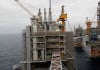
An image of general view of Equinor's Johan Sverdrup oilfield platforms in North Sea, Norway, taken on December 3, 2019. — Reuters
After an 18-year gap, Pakistan on Friday reopened its doors to offshore oil and gas exploration with the Offshore Bid Round 2025, announced by the Ministry of Energy.
The bid round offered 40 offshore blocks, and 23 received bids, covering an area of around 53,510 square kilometres. According to the Power Division, the response reflects “strong investor confidence” in Pakistan’s offshore exploration potential.
In a bid to increase international participation, the government created a Model Production Sharing Agreement (MPSA) and new offshore petroleum rules, providing exploration companies with transparency and regulatory certainty in the market.
To further revive global interest, a study conducted by United States (US) consultancy DeGolyer and MacNaughton (D&M) previously identified major unmonetised hydrocarbon potential for the Indus and Makran basins and has further reclaimed global interest in Pakistan.
The bid opening committee, overseen by the Director General of Petroleum Concessions, opened bids publicly, with officials from Sindh and Balochistan present. Participants included Oil and Gas Development Company Limited (OGDCL), Pakistan Petroleum Limited (PPL), MariEnergies, and Prime Energy, along with international partners Turkish Petroleum (TPAO), United Energy, Orient Petroleum, and Fatima Petroleum.
Initially, phase I of the programme is three years long and consists of 4,427 work units for geological and seismic studies worth approximately $80 million.
If exploratory studies provide early success, total investment in the frontier could exceed upwards of $750 million to $1 billion.
According to the Ministry of Energy, the successful bid round maintains “a major step forward in enhancing indigenous energy resources and reducing energy import dependence,” reaffirming Pakistan’s commitment to energy self-sufficiency and energy sustainability in the long term.