When you purchase through links on our site, we may earn an affiliate commission. Here’s how it works.
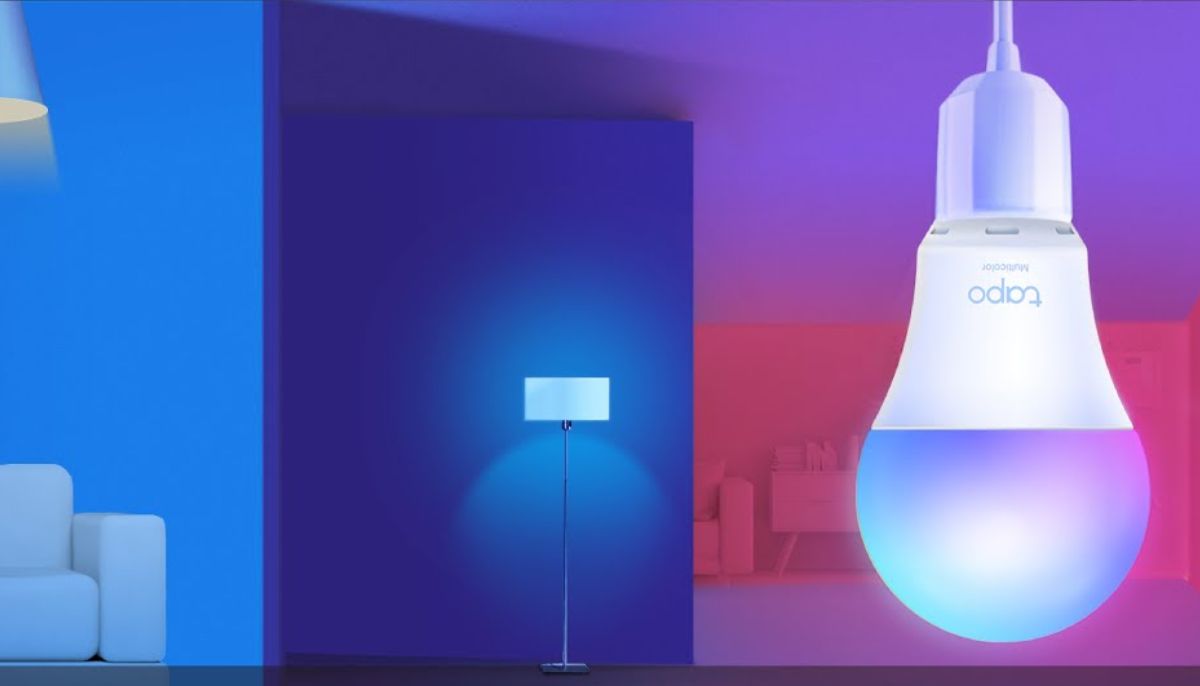
The TP-Link Tapo L531E Smart Light Bulb enters the smart home market as an accessible, hub-free lighting upgrade designed for renters, smart-home beginners, and everyday households looking to automate their interior ambiance.
Engineered to replace standard 60-watt incandescent bulbs while drawing just 9 watts of power, this A19 E26 LED bulb combines vibrant RGBW colour-changing capabilities with crisp, everyday white illumination.
At the core of the L531E is a high-accuracy LED array delivering up to 800 lumens of brightness alongside a Colour Rendering Index (CRI) exceeding 90, ensuring colours appear natural and vivid across your living space.
Specifications
-
Bulb Shape & Base: A19, E26 Screw Base
-
Wattage: 9 Watts (60W Incandescent Equivalent)
-
Voltage: 120V AC
-
Brightness: 800 Lumens
-
Colour Spectrum: 16 Million RGBW Colours, Tunable White (2500K – 6500K)
-
Colour Rendering Index (CRI): >90
-
Beam Angle: 220 Degrees
-
Connectivity: 2.4 GHz Wi-Fi Only (No Hub Required)
-
Smart Compatibility: Amazon Alexa, Google Home, Tapo App (iOS & Android)
-
Dimensions: 6.0 x 11.2 cm (2.36 x 4.41 inches)
-
Materials: Plastic
-
Warranty: 2-Year Manufacturer Warranty
Performance
The TP-Link Tapo L531E Smart Light Bulb offers an easy way to add colourful, app-controlled lighting to a room. Reviewers praised its vibrant colour output and brightness, along with the straightforward setup process through the Tapo app.
Connecting the bulb to Alexa was also described as simple, making it convenient for users who prefer controlling their lights with voice commands. Its range of colour options and smart controls allows users to adjust the room's lighting to suit different moods and activities without relying on a traditional switch.
Overall, it is a practical choice for anyone looking for bright, colourful lighting with convenient app and voice control.
Reasons to buy
No smart hub required: Connects directly to your existing 2.4 GHz Wi-Fi router, keeping setup simple and avoiding extra hardware costs.
- High colour accuracy (CRI >90): Renders skin tones, furniture, and room decor naturally compared to lower-CRI budget LED bulbs.
- Built-in energy monitoring: Tracks live wattage draw and historical usage inside the Tapo app to help manage household electricity bills.
- Wide tunable white and RGBW range: Transitions smoothly from a relaxing 2500K warm glow to focused 6500K daylight alongside 16 million party colours.
- Broad voice assistant support: Works effortlessly with Amazon Alexa and Google Assistant for hands-free dimming and scene switching.
Reasons to avoid
- 2.4 GHz Wi-Fi limitation: Does not support 5 GHz wireless networks, requiring dual-band router users to ensure their 2.4 GHz band is active during pairing.
- Moderate 800-lumen output: Matches a standard 60W bulb, which may feel slightly dim as the sole light source in larger living rooms.
- Indoor use only: Lacks weatherproofing for exposed outdoor fixtures and is designed strictly for dry indoor sockets.

Zainab Talha is a technology journalist specialising in electric vehicles, EV charging infrastructure, sustainable mobility, and emerging transportation technologies. Her reporting explores the innovations, policies, and industry developments driving the global shift towards cleaner and smarter mobility.
Her coverage spans the wider EV ecosystem, including charging networks, battery technology, renewable energy integration, smart mobility solutions, and government initiatives. She follows developments across automotive manufacturers, energy companies, charging providers, and technology firms to examine how new technologies are changing the way people travel and power their vehicles.
Beyond electric mobility, Zainab covers consumer technology, artificial intelligence, clean energy, connected devices, and digital transformation. She also has expertise in smart home and security technologies, reporting on deadbolts, smart locks, access control systems, surveillance devices, and connected security solutions.
Her work examines emerging technologies such as biometric authentication, remote access, IoT connectivity, and AI-powered security, with a focus on their practical applications and impact on consumers.
Known for her research-driven and accessible approach, Zainab translates complex technological developments into clear, engaging stories. Her reporting combines technical understanding with real-world context, helping readers navigate the rapidly changing worlds of mobility, technology, sustainability, and connected living.

 Nov 19, 2026