When you purchase through links on our site, we may earn an affiliate commission. Here’s how it works.
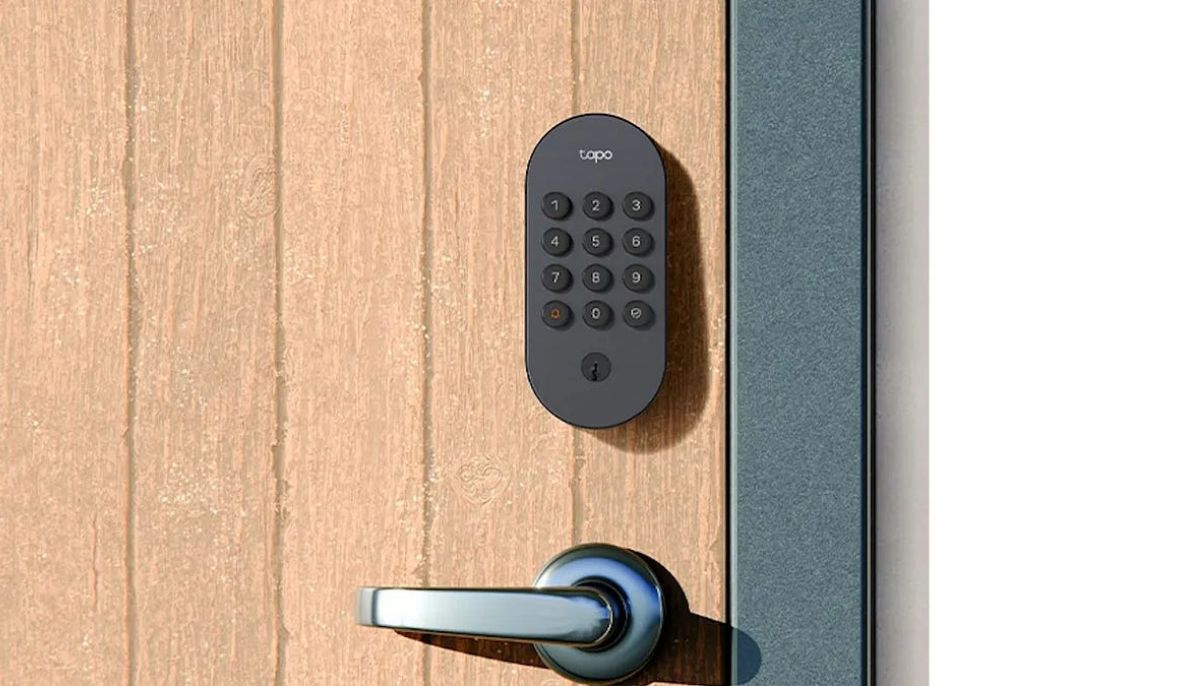
The Tapo DL100 Smart Wi-Fi Deadbolt by TP-Link offers an affordable, full-featured keyless entry solution designed to modernize standard residential doors.
Finished in sleek black metal, this electronic deadbolt features built-in Wi-Fi and Bluetooth capabilities, removing the requirement for an external hub or bridge.
Users can manage access control directly through the Tapo app, granting remote locking or unlocking, viewing activity logs with timestamps, and receiving real-time entry alerts.
Specifications
-
ASIN: B0F5BH3HDV
-
Model: Tapo DL100
-
Brand: TP-Link Tapo
-
Material: Metal
-
Finish: Black
-
Connectivity: Built-in Wi-Fi (2.4GHz) and Bluetooth
-
Unlock methods: Keypad PIN Passcode, Tapo App, Voice Control, Physical Key
-
Code capacity: Up to 200 custom passcodes
-
Smart Home support: Amazon Alexa, Google Assistant, Samsung SmartThings
-
Security rating: BHMA Grade 3 Certified
-
Waterproof rating: IP54 Weatherproof
Performance
The Tapo DL100 Smart Wi-Fi Deadbolt delivers strong overall performance, combining quick and straightforward installation with convenient smart-home functionality.
The lock is particularly suitable for users already using Tapo devices, offering a simple setup and a convenient, reliable addition to a connected home.
Reasons to buy
-
Built-in Wi-Fi connectivity: Connects directly to home wireless networks without requiring a separate smart hub or bridge.
-
Extensive code capacity: Supports up to 200 unique passcodes for family, visitors, and temporary service workers.
-
Emergency USB-C jump-start: Features an external USB-C port to power up the keypad if AA batteries are exhausted.
-
Broad smart home ecosystem: Integrates seamlessly with Amazon Alexa, Google Home, and Samsung SmartThings for voice commands and routines.
Reasons to avoid
-
No fingerprint scanner: Lacks a biometric fingerprint reader, relying instead on physical buttons, app control, or keys.
-
IP54 rating limits: Protected against light dust and splashes, but best mounted under a covered entryway rather than fully exposed exterior gates.
-
2.4GHz network requirement: Direct Wi-Fi connection requires a dedicated 2.4GHz Wi-Fi network during initial setup.

Zainab Talha is a technology journalist specialising in electric vehicles, EV charging infrastructure, sustainable mobility, and emerging transportation technologies. Her reporting explores the innovations, policies, and industry developments driving the global shift towards cleaner and smarter mobility.
Her coverage spans the wider EV ecosystem, including charging networks, battery technology, renewable energy integration, smart mobility solutions, and government initiatives. She follows developments across automotive manufacturers, energy companies, charging providers, and technology firms to examine how new technologies are changing the way people travel and power their vehicles.
Beyond electric mobility, Zainab covers consumer technology, artificial intelligence, clean energy, connected devices, and digital transformation. She also has expertise in smart home and security technologies, reporting on deadbolts, smart locks, access control systems, surveillance devices, and connected security solutions.
Her work examines emerging technologies such as biometric authentication, remote access, IoT connectivity, and AI-powered security, with a focus on their practical applications and impact on consumers.
Known for her research-driven and accessible approach, Zainab translates complex technological developments into clear, engaging stories. Her reporting combines technical understanding with real-world context, helping readers navigate the rapidly changing worlds of mobility, technology, sustainability, and connected living.

 Sep 09, 2026