Jul 26, 2026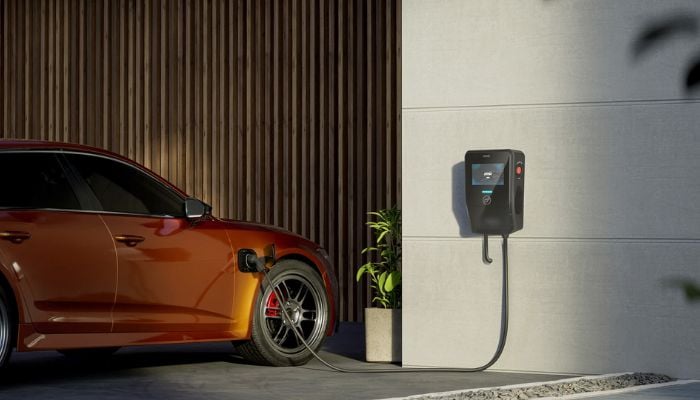
Today's smart EV chargers do far more than simply recharge a battery — they help drivers lower electricity costs, schedule charging during off-peak hours, integrate with solar panels, and remotely monitor charging sessions through smartphone apps.
Unlike conventional chargers that begin charging immediately after being plugged in, smart chargers use Wi-Fi, Bluetooth, cloud connectivity and intelligent energy management to optimise charging based on electricity tariffs, household energy consumption and renewable energy availability.
Here are some of the best smart EV chargers available in 2026.
1. Smappee EV Wall
The Smappee EV Wall stands out as one of the most advanced smart charging systems currently available. Developed by Belgian energy management specialist Smappee, it combines EV charging with comprehensive home energy monitoring.
Available in both 7.2kW single-phase and 22kW three-phase versions, the charger includes the company's Infinity energy management platform, allowing homeowners to monitor electricity, solar generation, gas and water consumption from a single system.
2. Wallbox Pulsar Max
The Wallbox Pulsar Max is designed for homeowners looking for a compact charger with powerful smart features. Through the Wallbox mobile app, users can remotely monitor charging sessions, lock the charger and schedule charging to take advantage of lower overnight electricity rates.
3. Zappi V2
Manufactured by UK-based Myenergi, the Zappi V2 has become one of the most popular smart chargers for homes equipped with solar panels.
The charger offers three operating modes—Eco, Eco+ and Fast—allowing drivers to prioritise self-generated solar energy or maximise charging speed when needed.
4. Andersen A2
The Andersen A2 combines premium design with advanced smart charging capabilities. Available in 7kW and 22kW variants, it offers features including solar-only charging, smart scheduling, adjustable charging current and dynamic load balancing through the Andersen Konnect app.
Why choose a smart EV charger?
Smart EV chargers offer several advantages over conventional charging stations. Features such as app-based monitoring, scheduled charging, solar integration and automatic load balancing help reduce electricity costs while improving charging efficiency.