Aug 14, 2026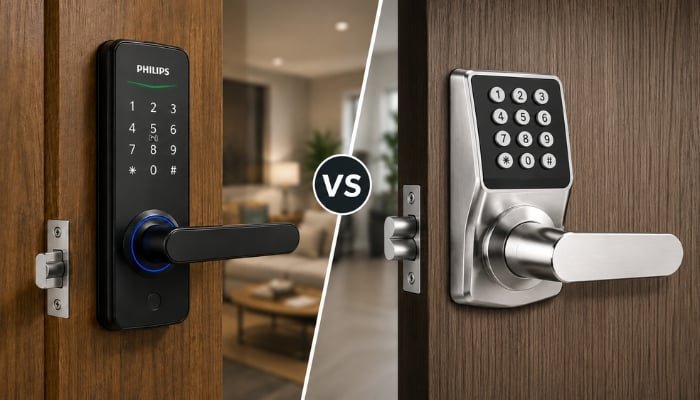
Keypad smart locks can make everyday entry more convenient by replacing traditional keys with PINs, fingerprints or other keyless access methods. However, different models target different types of users, with some focusing on smart-home connectivity and others prioritising simple access and backup options.
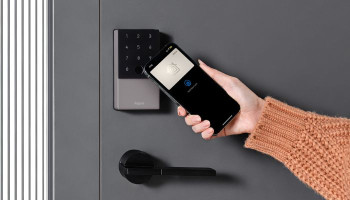
The Philips Wi-Fi Smart Door Lock with Handle and Cielsa Keypad Door Lock with Handle take noticeably different approaches. Philips combines fingerprint recognition, a touchscreen keypad, Wi-Fi connectivity and app-based remote control, while Cielsa offers passcode, key-fob and emergency-key access with features such as anti-peep passwords, auto-lock and emergency USB-C power.
Philips vs Cielsa specs
| Feature | Philips Wi-Fi Smart Door Lock | Cielsa Keypad Door Lock with Handle |
| Lock type | Smart lever/keypad lock | Electronic keypad door lock |
| Fingerprint | Yes | No |
| Keypad | Touchscreen keypad | Keypad with anti-peep password |
| Wi-Fi | Yes | No |
| App control | Yes | No |
| Remote access | Yes | No |
| Fingerprint capacity | Up to 50 fingerprints | Not applicable |
| User codes | Not specified | Up to 78 user codes + 20 one-time codes |
| Key fob | Not specified | Yes |
The Philips model lists Wi-Fi connectivity, app control, fingerprint recognition and smart-home compatibility, while Cielsa's specifications highlight its keypad, multiple access methods, IP65 protection and emergency USB-C power.
Philips Wi-Fi Smart Door Lock with Handle
The Philips Wi-Fi Smart Door Lock with Handle is aimed at users who want more than basic keyless entry. Its fingerprint reader can unlock the door in around 0.3 seconds and supports up to 50 fingerprints, giving households a quick biometric option alongside keypad access.
Pros
- Fast fingerprint unlocking
- Stores up to 50 fingerprints
- Built-in Wi-Fi connectivity
- App-based remote control
- Touchscreen keypad
- Supports Alexa and Google Assistant
- Mechanical keys for backup
Cons
- More dependent on smart-home connectivity
- Requires batteries for operation
- Smart features may be unnecessary for users who only want keypad entry
- More advanced features can mean a more complicated setup
Cielsa Keypad Door Lock with Handle
The Cielsa Keypad Door Lock with Handle takes a simpler approach by concentrating on multiple physical access methods rather than Wi-Fi or app control. Users can unlock the door with a passcode, key fob or emergency key, making it useful for households where different people need convenient access without sharing a single physical key.
Pros
- Supports up to 78 user codes
- 20 one-time codes
- Passcode, key-fob and emergency-key access
- Anti-peep password feature
- Auto-lock function
- IP65 weather resistance
- USB-C emergency power
- Compatible with 1.3–2.04-inch thick doors
Cons
- No fingerprint scanner
- No built-in Wi-Fi
- No app-based remote access
- No Alexa or Google Assistant integration listed
- Relies mainly on keypad, fob and physical-key access
Which smart door lock should you buy?
The Philips Wi-Fi Smart Door Lock with Handle is the better choice for users who want a more connected smart-home experience. Its fingerprint scanner provides fast biometric access, while built-in Wi-Fi and app control allow users to manage and monitor the lock remotely.
On the other hand, the Cielsa Keypad Door Lock with Handle makes more sense for users who prioritise flexible access, high code capacity and weather resistance over remote connectivity. With up to 78 user codes, 20 one-time codes, key-fob access, an emergency key, anti-peep protection and USB-C emergency power, it offers a practical set of features for homes and other properties with multiple users.
Overall, Philips is the stronger option for smart-home connectivity and biometric convenience, while Cielsa is the more practical choice for users who mainly want versatile keyless entry without Wi-Fi or app dependence.