When you purchase through links on our site, we may earn an affiliate commission. Here’s how it works.
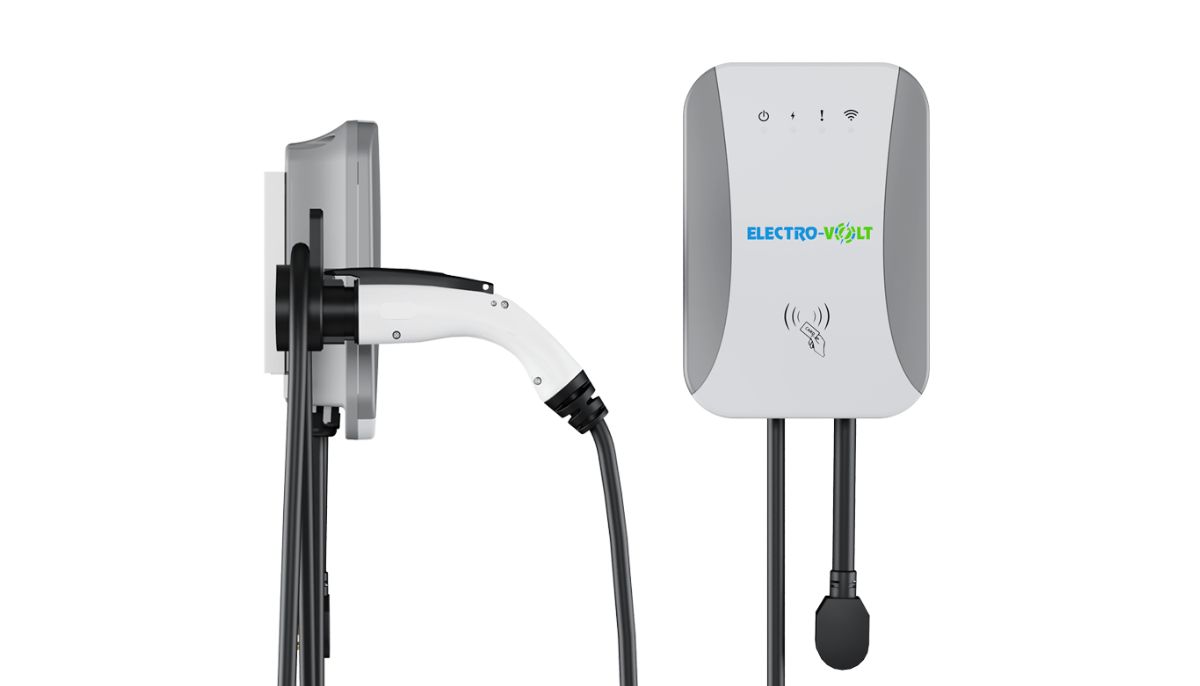
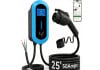
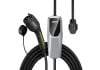
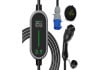
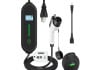
The Electro-Volt Level 2 EV Charger enters the residential automotive accessory market as a high-capacity power station engineered for electric vehicle drivers who want to move past the slow pace of standard baseline trickle wires.
Operating on a high-voltage 240V AC line, this hardware balances the rapid speeds of a dedicated home hub with a flexible plug-in installation.
Instead of relying on a permanent, complex hardwired configuration, it features a standardized NEMA 14-50 wall plug, serving as an excellent primary home setup or a highly capable travel asset for locations with compatible heavy-duty outlets.
Specifications
-
ASIN: B0BXNMYTLP
-
Brand: Electro-Volt
-
Voltage: 240V AC
-
Amperage: Up to 40 Amp (Adjustable)
-
Wattage: 10 kW maximum
-
Plug type: NEMA 14-50
-
Connector type: Universal SAE J1772 standard
-
Connectivity: Wi-Fi and Ethernet support
-
Access control: RFID cards (2 included)
-
Waterproof rating: IP65 certified for indoor/outdoor use
-
Safety certifications: FCC certified with short-circuit protection
Performance
The Electro-Volt Level 2 EV Charger delivers reliable and efficient charging performance with up to 40 Amps (10 kW) of Level 2 power, replenishing compatible EVs significantly faster than a standard Level 1 outlet.
Its adjustable current settings allow users to optimize charging based on available circuit capacity, while stable power delivery ensures dependable overnight charging for both battery-electric vehicles and plug-in hybrids.
Reasons to buy
-
Impressive Level 2 speeds: Supplies up to 10 kW of power to charge your electric vehicle significantly faster than traditional low-voltage household outlets.
-
Flexible current customisation: The adjustable current architecture makes it simple to tailor power draws safely to your specific home infrastructure boundaries.
-
Versatile data connectivity: Features integrated Wi-Fi and physical Ethernet support for steady network connectivity and intelligent management.
-
Secure access restrictions: Ships with two dedicated RFID cards, preventing unauthorised individuals from activating your charging station when installed outdoors.
-
Top-tier environmental sealing: Encased in an IP65-certified weatherproof housing built to handle continuous exposure to the elements reliably.
Reasons to avoid
-
Tesla models require an extra component: Employs a standard North American J1772 connector head, meaning Tesla motorists must use a separate accessory adapter to connect.
-
Demands existing high-voltage infrastructure: Accessing full rapid-charging speeds requires a dedicated 240V NEMA 14-50 household outlet wired to an appropriate circuit breaker.
-
Physical controls are minimal: Relies heavily on network setups or manual cards for configuration, which may feel less intuitive for users who prefer simple onboard buttons.

Zainab Talha is a technology journalist specialising in electric vehicles, EV charging infrastructure, sustainable mobility, and emerging transportation technologies. Her reporting explores the innovations, policies, and industry developments driving the global shift towards cleaner and smarter mobility.
Her coverage spans the wider EV ecosystem, including charging networks, battery technology, renewable energy integration, smart mobility solutions, and government initiatives. She follows developments across automotive manufacturers, energy companies, charging providers, and technology firms to examine how new technologies are changing the way people travel and power their vehicles.
Beyond electric mobility, Zainab covers consumer technology, artificial intelligence, clean energy, connected devices, and digital transformation. She also has expertise in smart home and security technologies, reporting on deadbolts, smart locks, access control systems, surveillance devices, and connected security solutions.
Her work examines emerging technologies such as biometric authentication, remote access, IoT connectivity, and AI-powered security, with a focus on their practical applications and impact on consumers.
Known for her research-driven and accessible approach, Zainab translates complex technological developments into clear, engaging stories. Her reporting combines technical understanding with real-world context, helping readers navigate the rapidly changing worlds of mobility, technology, sustainability, and connected living.

 Jul 13, 2026