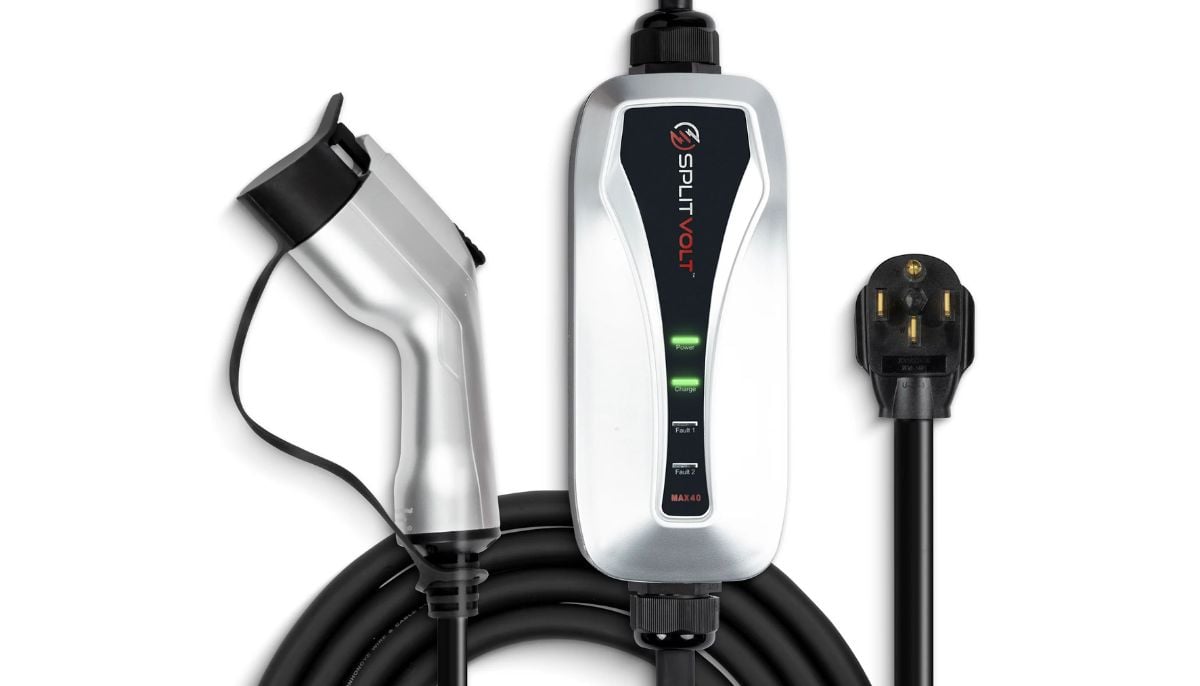
Splitvolt Level 2 Portable EV Charger

Splitvolt Level 2 Portable EV Charger delivers dependable charging performance for drivers with access to a 30 Amp, 240V circuit

When you purchase through links on our site, we may earn an affiliate commission. Here’s how it works.

Drivers searching for a swift and highly customisable home charging upgrade without resorting to expensive, permanent electrical modifications will find a highly practical ally in the Splitvolt Level 2 Portable EV Charger.

Purpose-built to max out the safe limits of a standard 30 Amp household circuit, this clever plug-and-play accessory offers a substantial speed upgrade over basic, sluggish automotive trickle cords.

Delivering a peak output of 24 Amps, it bridges the gap perfectly between portable convenience and reliable overnight replenishment.

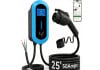
Specifications

  • ASIN: B0D88Y4FGN

  • Model number: CGB-J1-E26-24A

  • Voltage: 240V AC Input / Output

  • Amperage: 24 Amps maximum (Adjustable to 8A / 10A / 12A / 16A / 20A / 24A)

  • Plug type: NEMA 10-30

  • Connector type: Universal SAE J1772

  • Display type: Live digital LCD screen

  • Item weight: 3.5 kg (7.7 lbs)

  • Specifications met: UL, FCC, CEC, CSA, IEC

Performance

The Splitvolt Level 2 Portable EV Charger delivers dependable charging performance for drivers with access to a 30 Amp, 240V circuit, striking an excellent balance between portability and efficiency.

Operating at a maximum output of 24 Amps (5.7 kW), it typically adds around 20 to 25 miles of driving range per hour, depending on the vehicle's onboard charging capability.

The integrated LCD display offers continuous feedback on charging status, voltage, and current, allowing users to monitor performance at a glance, while the delay-start timer helps reduce charging costs by taking advantage of off-peak electricity rates.

Today's best deals

  • Splitvolt Level 2 24A Portable EV Charger (NEMA 10-30) — View at Amazon

Reasons to buy

  • Optimised 30 amp output: Safely draws up to 24 Amps to deliver the highest allowable rate for a standard National Electrical Code (NEC)-approved 30 Amp home circuit.

  • Granular current selection: Features six selectable current steps, allowing you to easily adjust the power draw to protect domestic breaker capacities.

  • Hardware-based scheduling: The simple on-unit delay timer lets you easily program charging windows to exploit lower off-peak utility rates.

  • Live diagnostics screen: The built-in LCD screen keeps you instantly updated with real-time operational metrics and continuous safety feedback.

  • Highly portable configuration: Weighing just 7.7 lbs, the ultra-lightweight design is easy to handle and pack away for long travel use.

Reasons to avoid

  • No remote smartphone apps: Lacks advanced Wi-Fi or Bluetooth smartphone connectivity, restricting tracking options entirely to the physical device.

  • Capped charging velocity: Restricted to a maximum output of 24 Amps, which is notably slower than high-capacity 40 Amp or 48 Amp home wallboxes.

  • Adapter required for Tesla cars: The universal J1772 plug handle links standard cars directly, meaning Tesla drivers must rely on a separate adapter accessory.

Zainab Talha is a technology journalist specialising in electric vehicles, EV charging infrastructure, sustainable mobility, and emerging transportation technologies. Her reporting explores the innovations, policies, and industry developments driving the global shift towards cleaner and smarter mobility.

Her coverage spans the wider EV ecosystem, including charging networks, battery technology, renewable energy integration, smart mobility solutions, and government initiatives. She follows developments across automotive manufacturers, energy companies, charging providers, and technology firms to examine how new technologies are changing the way people travel and power their vehicles.

Beyond electric mobility, Zainab covers consumer technology, artificial intelligence, clean energy, connected devices, and digital transformation. She also has expertise in smart home and security technologies, reporting on deadbolts, smart locks, access control systems, surveillance devices, and connected security solutions.

Her work examines emerging technologies such as biometric authentication, remote access, IoT connectivity, and AI-powered security, with a focus on their practical applications and impact on consumers.

Known for her research-driven and accessible approach, Zainab translates complex technological developments into clear, engaging stories. Her reporting combines technical understanding with real-world context, helping readers navigate the rapidly changing worlds of mobility, technology, sustainability, and connected living.