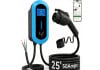
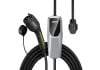
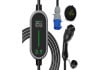
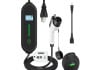
Junsun Level 1 & 2 Portable EV Charger

Junsun Level 1 & 2 Portable EV Charger delivers reliable and versatile charging performance with maximum output of 32 Amps and 7 kW on 240V connection

When you purchase through links on our site, we may earn an affiliate commission. Here’s how it works.
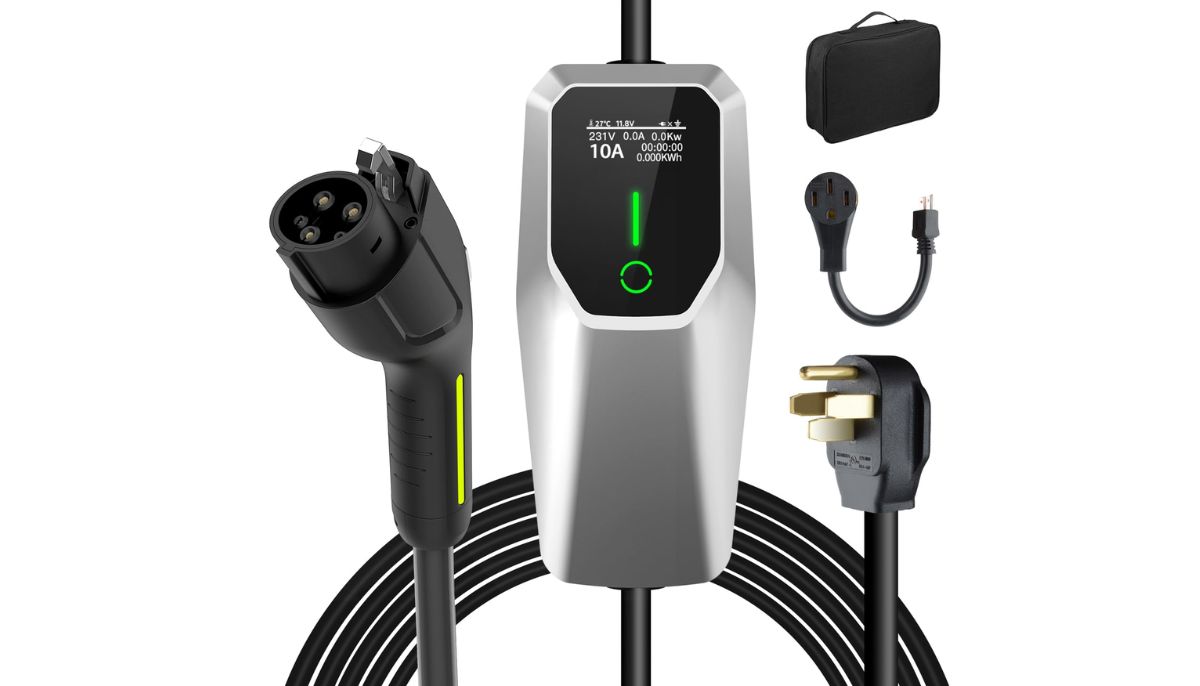
The Junsun Level 1 & 2 Portable EV Charger enters the competitive residential energy market as an incredibly flexible charging solution designed for drivers who require reliable power both at home and on the move.

Operating as a smart dual-voltage system, this lightweight unit functions as a slow-replenishing Level 1 emergency wire or a rapid Level 2 power supply.

By shipping with a native high-amperage NEMA 14-50 plug alongside a standard NEMA 5-15 adapter, it completely eliminates the need for expensive, permanent hardwired wallboxes.

Specifications

  • ASIN: B0F58YYLL3

  • Brand: Junsun

  • Model number: JS-US-DCDQ326TM-D

  • Voltage: Dual-voltage 110V – 240V AC

  • Amperage: Up to 32 Amps (Adjustable 6A/8A/10A/13A/16A/20A/24A/32A)

  • Wattage: Up to 7 kW max

  • Plug type: NEMA 14-50 (with NEMA 5-15 adapter included)

  • Connector type: Universal SAE J1772 standard

  • Cable length: 20 ft (approx. 6 metres)

  • Display type: LCD digital display

  • Operating temperature: -13°F to 131°F (-25°C to 55°C)

  • Safety protections: Leakage, overcharge, under-voltage, and short-circuit protections

Performance

The Junsun Level 1 & 2 Portable EV Charger delivers reliable and versatile charging performance with a maximum output of 32 Amps and 7 kW on a 240V connection. 

Its adjustable amperage settings, real-time LCD monitoring, and comprehensive safety protections ensure stable, efficient performance across a wide range of charging environments.

Today's best deals

Reasons to buy

  • Exceptional dual-voltage versatility: The interchangeable NEMA 14-50 and NEMA 5-15 plugs allow you to charge from high-voltage outlets or standard household sockets.

  • Fast and adjustable power: Delivers up to 7 kW of charging performance, with granular amperage options to prevent household circuit overloads.

  • Clear real-time diagnostics: The built-in LCD screen ensures you can monitor live voltage, charging speed, and energy transfer without needing a smartphone.

  • Frictionless travel design: Highly portable and compact, it comes supplied with a soft carrying case to serve as a perfect travel companion on road trips.

  • Robust safety protections: Features comprehensive internal safeguards, including leakage and overcharge protection, to protect your car's battery health.

Reasons to avoid

  • Shorter standard cable reach: The 20-foot cable is slightly shorter than the typical 25-foot industry standard, requiring close parking proximity to your outlet.

  • Tesla models require a separate component: Utilises a standard SAE J1772 connector head, meaning Tesla motorists must use a separate NACS adapter to connect.

  • Lacks smart wireless options: Designed as an offline physical unit, meaning it lacks Wi-Fi, Bluetooth, or remote smartphone application scheduling.

Zainab Talha
twitter

Zainab Talha is a technology journalist with a strong focus on electric vehicles (EVs), EV charging infrastructure, sustainable mobility, and the rapidly evolving transportation technology sector. She specialises in covering the innovations, policies, and industry developments shaping the future of mobility, delivering accurate, insightful, and reader-friendly reporting that makes complex technological advancements accessible to a broad audience.

Her work spans every aspect of the EV ecosystem, including advancements in charging networks, battery technologies, renewable energy integration, smart mobility solutions, and government initiatives supporting the global transition towards cleaner transportation. She closely follows developments from leading automotive manufacturers, charging infrastructure providers, energy companies, and technology firms, providing readers with timely analysis of the trends transforming how people travel and power their vehicles.

In addition to electric mobility, Zainab extensively covers the broader technology landscape, reporting on emerging innovations, consumer technology, artificial intelligence, clean energy solutions, connected devices, and digital transformation across industries. Her reporting combines technical accuracy with clear storytelling, enabling readers to stay informed about the technologies influencing everyday life and the future of transportation.

Zainab also has expertise in smart home technology and home security, with particular interest in deadbolts, smart locks, access control systems, and connected security solutions. She regularly explores advancements in residential and commercial security technologies, reviewing new products, explaining security best practices, and analysing how innovations such as biometric authentication, remote access, IoT connectivity, and AI-powered security are reshaping modern home protection.

Known for her research-driven approach, Zainab follows industry announcements, product launches, regulatory updates, and market trends to provide balanced, fact-based journalism. She strives to bridge the gap between technical innovation and everyday users by translating complex subjects into engaging, easy-to-understand stories without compromising accuracy.

Whether reporting on next-generation EV charging stations, breakthroughs in battery technology, advancements in sustainable transport, or the latest developments in smart security and connected home devices, Zainab is committed to producing trustworthy journalism that helps readers navigate the fast-moving world of technology. Her work reflects a passion for innovation, sustainability, and practical technology that empowers consumers, industry professionals, and enthusiasts alike to make informed decisions in an increasingly connected world.