Sep 13, 2026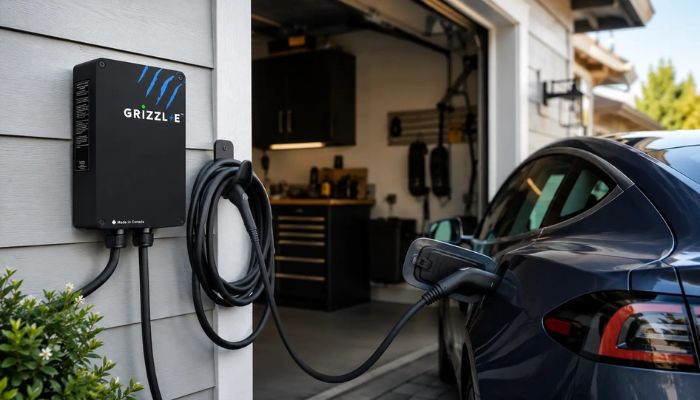
Buying an electric vehicle (EV) solves one problem but creates another: How do you charge it easily at home? A standard household outlet might be relable, but Level 2 EV chargers are much faster and are generally the better option for drivers who want a meaningful amount of range every day.
Today's modern models feature Wi-Fi connectivity, charging schedules, energy monitoring, load management, various connector options, and compatibility with a variety of electrical setups.
Gadinsider has evaluated five of the best home EV chargers across charging output, connectivity, installation flexibility, cable length, durability, compatibility, and overall value to help you choose the right option.
Best EV chargers for home in 2026
Our picks at a glance:
- Best overall: ChargePoint Home Flex
- Best value: Emporia Level 2 EV charger
- Best compatibility: Tesla Universal Wall Connector
- Best durability: Grizzl-E Classic Level 2 EV Charger
- Best smart/compact option: Lectron Level 2 WiFi
1. ChargePoint Home Flex — Best overall
The ChargePoint Home Flex is our pick for the best overall home EV charger as it offers a particularly strong balance between charging speed, flexibility, smart features, and everyday usability.
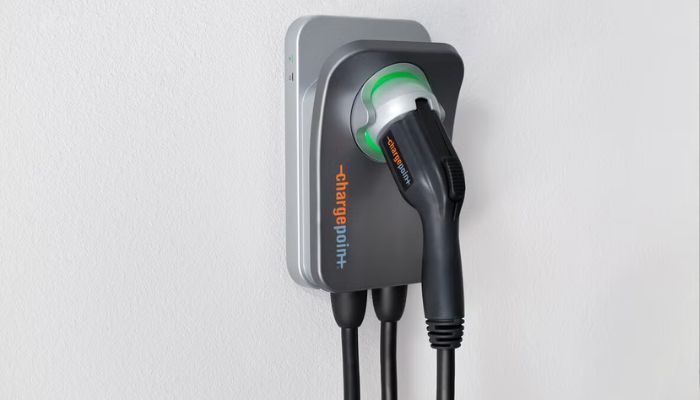
The charger can deliver up to 50 amps and 12 kW when installed on a suitable circuit, while users can select lower output levels to match the electrical capacity of their home.
When it comes to installation, the Home Flex is also unusually flexible. Depending on the configuration, it can be plugged into a NEMA 6-50 or NEMA 14-50 outlet or hardwired.
| Specifications | ChargePoint Home Flex |
Maximum output | 50A / 12 kW |
Voltage | 208–240V AC |
Adjustable current | 16A, 24A, 32A, 40A, 48A, 50A |
Connector | J1772 / NACS variants |
Cable length | 23 ft |
Installation | Plug-in or hardwired |
Connectivity | Wi-Fi, Bluetooth |
Outdoor rating | NEMA 3R |
Performance
For daily EV drivers, the ChargerPoint Home Flex has more than enough power to make overnight charging straightforward. At its maximum 12-kW output, it can add more range per hour than Level 1 charging, although actual charging speed depends on the vehicle's onboard charger and battery characteristics.
Pros
- Excellent combination of speed, smart features
- Up to 50A/12-kW charging capability
- 23-foot cable
- Flexible plug-in and hardwired installation
Cons
- More expensive than basic Level 2 chargers
- Maximum output requires appropriate electrical capacity
2. Emporia Level 2 EV Charger — Best value
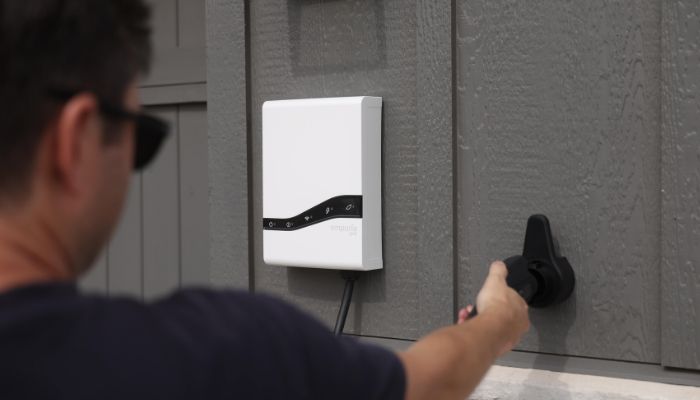
The Emporia Level 2 EV Charger is the charger to choose when value matters but you don't want to sacrifice smart functionality.
The charger can deliver up to 48 amps and 11.5 kW when hardwired, while its plug-in configuration can operate at lower output depending on the electrical setup.
The charger also works with the Emporia app to provide information about electricity consumption and charging activity.
| Specification | Emporia Level 2 EV Charger |
Maximum output | 48A / 11.5 kW |
Plug-in output | Up to 40A / 9.6 kW |
Voltage | 208–240V AC |
| Connector | J1772 / NACS options |
| Cable length | 24–25 ft |
| Connectivity | 2.4GHz Wi-Fi |
| Outdoor rating | NEMA 4 |
| Warranty | 3 years |
Performance
At 48 amps, the Emporia Level 2 EV Charger can deliver up to 11.5 kW. That is enough for most EV owners to replenish a substantial amount of battery capacity overnight.
Owners can monitor electricity consumption and schedule charging, while Emporia's wider energy-monitoring ecosystem can make the charger particularly useful for households interested in understanding where their electricity is going.
Pros
- Excellent charging performance for the price
- Up to 48A/11.5 kW when hardwired
- Strong energy-monitoring features
- J1772 and NACS options
Cons
- App can feel more complicated than necessary
- 2.4GHz Wi-Fi may be limiting
3. Tesla Universal Wall Connector — Best compatibility
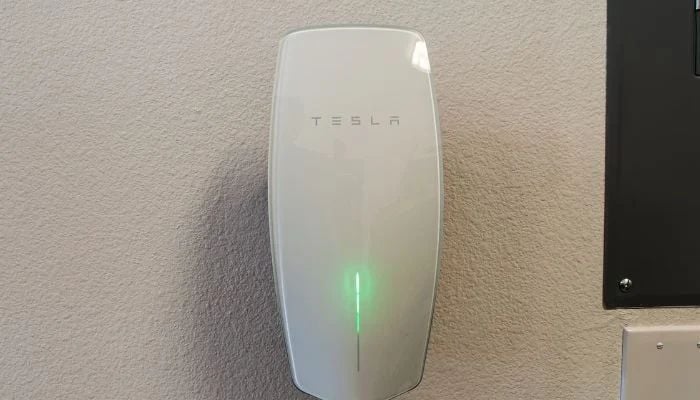
The Tesla Universal Wall Connector is easily one of the most reliable choices for households that own both Tesla and non-Tesla EVs. Unlike the standard Tesla Wall Connector, this model includes an integrated adapter that allows it to work with both NACS and J1772 vehicles.
Tesla rates the Universal Wall Connector for up to 48 amps and 11.5 kW, with a 24-foot cable. This makes it especially attractive for households where one person drives a Tesla while another drives a J1772-equipped EV.
| Specification | Tesla Universal Wall Connector |
Maximum output | 48A / 11.5 kW |
Voltage | 208–240V AC |
| Cable length | 24 ft |
Installation | Hardwired |
Connectivity | Wi-Fi |
Warranty | 4 years residential |
Outdoor rating | NEMA 3R |
Performance
The Tesla Universal Wall Connector's charging performance is essentially in line with what you'd expect from a premium 48-amp Level 2 charger. However, the Universal model's real advantage is compatibility rather than outright charging speed.
Pros
- Strong 11.5-kW charging capability
- 24-foot cable
- Wi-Fi connectivity
Cons
- Higher upfront cost than many value-oriented chargers
- Some Tesla-specific functionality is less useful for non-Tesla vehicles
4. Grizzl-E Classic Level 2 EV Charger — Best durability
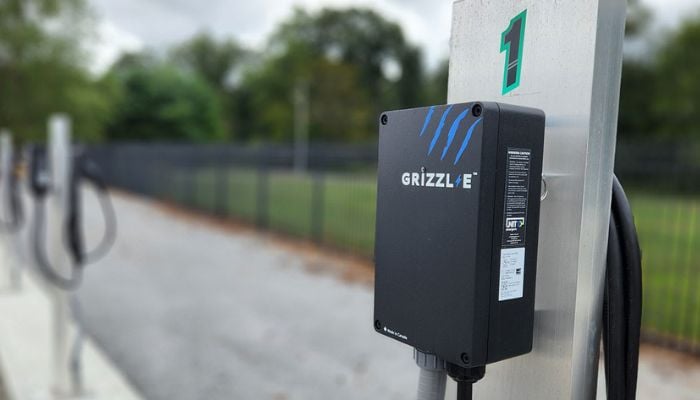
The Grizzl-E Classic Level 2 EV Charger takes a very different approach compared to other smart chargers such as the Emporia Level 2 and ChargePoint.
Rather than loading the charger with apps, cloud connectivity and energy dashboards, Grizzl-E focuses on something much simpler: build quality and reliable charging.
It can deliver up to 40 amps and 9.6 kW, making it powerful enough for routine overnight charging for most EV owners.
| Specification | Grizzl-E Classic Level 2 EV Charger |
Maximum output | 40A / 9.6 kW |
| Plug type | NEMA 14-50 |
Connector | SAE J1772 |
| Cable length | 24 ft |
| Enclosure | Heavy-duty metal |
Weather protection | IP67 |
Smart connectivity | None |
Safety features | UL certified, GFCI, overcurrent and temperature protection |
Performance
While the Grizzl-E Classic isn't the fastest charger in this group, the 9.6 kW is still more than enough for overnight charging for many EVs.
Since the charger isn't dependent on Wi-Fi, cloud services or a smartphone application for basic charging, there are fewer software-related variables between plugging in the vehicle and starting a charging session.
Pros
- Extremely durable metal enclosure
- IP67 weather protection
- Up to 40A/9.6 kW charging
- 24-foot cable
Cons
- No smartphone app
- No remote monitoring or charging schedules
- J1772 connector requires an adapter for NACS vehicles
5. Lectron Level 2 J1772 WiFi Charger — Best compact charger
The Lectron Level 2 J1772 WiFi Charger is designed for byers who want smart charging without committing to a large, permanently installed wallbox.
It supports adjustable charging from 8A to 40A and 16-foot cable which is shorter than those of the other chargers in this roundup, but that also helps keep the overall setup more manageable.
| Specification | Lectron Level 2 WiFi |
| Maximum output | 40A / 9.6 kW |
| Adjustable current | 8A–40A |
| Connector | SAE J1772 |
| Cable length | 16 ft |
| Connectivity | Wi-Fi |
| Installation | Portable / wall mounted |
| Smart features | App control, scheduling, energy monitoring |
Performance
At 40 amps, the Lectron Level 2 J1772 WiFi Charger can deliver up to 9.6 kW, putting it comfortably into Level 2 charging territory.
Owners can also monitor electricity consumption and set charging schedules rather than treating the charger as a completely passive power source.
Pros
- Compact and relatively portable
- Affordable compared with premium wallboxes
- Energy monitoring
- Adjustable charging output
Cons
- Shorter cable
- No dedicated cord-management system
- NACS vehicles may require an adapter
How we tested EV chargers
For this Gadinsider roundup, we evaluated each EV charger across the factors that matter most during everyday home charging, including charging output, installation flexibility, connector compatibility, cable reach, smart functionality, weather protection, energy monitoring, ease of use and overall value.
We also compared the manufacturers' electrical specifications and real-world functionality against the requirements of modern EV charging. Maximum advertised output was treated as only one part of the evaluation because an EV can charge only as quickly as its onboard AC charger and the home's electrical circuit allow.
For instance, a 48-amp charger won't automatically make a vehicle charge at 48 amps if the car is limited to a lower AC input.
Installation was another major consideration. We compared plug-in and hardwired configurations, adjustable amperage settings and the electrical requirements associated with higher-output charging.
We also considered cable length and cable management, because these seemingly minor details can have a major impact on everyday convenience.
Finally, durability and outdoor suitability were considered separately from smart features. A charger such as the Grizzl-E Classic makes a stronger case through its metal enclosure and IP67 protection, while products such as ChargePoint and Emporia place more emphasis on smart energy management and connectivity.
Which EV charger should you buy?
The ChargePoint Home Flex is the easiest recommendation for most buyers. Its combination of maximum output, adjustable amperage, smart charging controls, energy tracking and flexible installation makes it a well-rounded choice.
Meanwhile, the Emporia Level 2 makes more sense if value is your priority. If your household includes different EV connector types, the Tesla Universal Wall Connector is particularly compelling because its integrated adapter supports both NACS and J1772 vehicles.
For harsh outdoor conditions or buyers who simply want a charger that prioritises physical durability over connected features, the Grizzl-E Classic is the better fit.
FAQs
1. What is the best EV charger for home use in 2026?
The ChargePoint Home Flex is our best overall pick because it combines high charging output, adjustable amperage, smart controls, energy monitoring and flexible installation.
2. Is a Level 2 EV charger worth it?
For most EV owners who regularly charge at home, yes. Level 2 chargers use 240-volt AC power and can deliver considerably more power than a standard household outlet.
3. How many amps should my home EV charger have?
It totally depends on both your EV and your home's electrical capacity. A 32- or 40-amp charger is enough for many households, while 48- and 50-amp chargers can provide faster charging when the vehicle and electrical system support it.
4. Is 40 amps enough for an EV charger?
Yes. A 40-amp charger operating on a 240-volt circuit can deliver up to about 9.6 kW, which is sufficient for overnight charging for many EVs.
5. Can I install an EV charger outside?
Yes, provided the charger is rated for outdoor installation and is installed according to local electrical requirements. The chargers in this roundup have outdoor-rated designs, although their protection levels differ.
6. Should I buy a J1772 or NACS EV charger?
This completely depends on your vehicle and household. J1772 remains common among many EVs, while NACS/J3400 has become increasingly important in North America. If you expect to charge different EVs, a charger with both connector compatibility can be more future-proof.
7. Do smart EV chargers save money?
Smart chargers can schedule charging for periods when electricity is cheaper and can provide information about how much energy your vehicle consumes.
Why trust Gadinsider
At Gadinsider, our main goal is to make technology easier to understand before you plan to spend your money on it. We don't believe a product should be recommended simply because it has the best specifications or the longest list of features.
For EV chargers, we consider how a charger fits into a real home, how easy it is to install and use, whether its smart features are genuinely useful, how much reach its cable provides, how well it handles outdoor conditions and whether its price makes sense compared with competing products.
For this roundup, we compared manufacturer specifications, charging capabilities, installation options, connectivity features, durability ratings and available product information alongside established EV-charging testing and evaluation practices.