Rehan Shahid
  Jan 07, 2026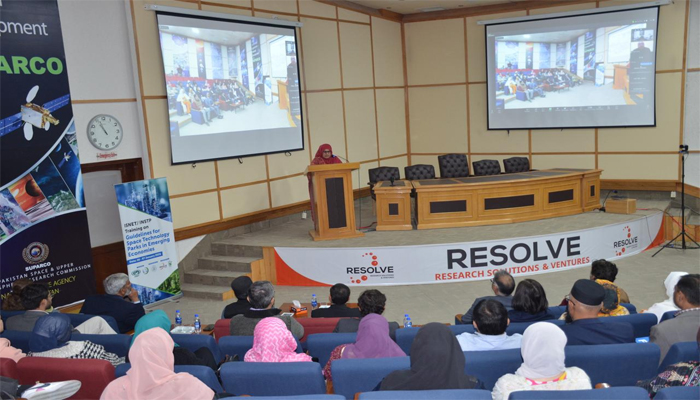
Pakistan Space & Upper Atmosphere Research Commission (SUPARCO) on Tuesday hosted a hybrid training workshop, named 'Inter-Islamic Network on Space Sciences and Technology (ISNET)- Inter-Islamic Network on Science and Technology Parks (INSTP) Hybrid Training Programme on guidelines for Space Technology Parks in Emerging Economies', under the framework of the ISNET and INSTP.
The two-day programme — January 6 and January 7, 2026 — aims to equip students, researchers, and professionals with hands-on skills relevant to space technology park planning, management, and innovation leadership; allow participants to translate research into viable applications, startups, and commercial space solutions through practical exposure and incubation-oriented approaches; and build long-term institutional capacity by strengthening collaboration among academia, industry, and government to ensure sustained growth of the space innovation ecosystem.
The training workshop convenes senior policymakers, academia, industry leaders, and innovation stakeholders from Pakistan and abroad to advance practical and policy-driven approaches for developing space and science technology parks in emerging economies.
Speakers emphasized the need for globally aligned governance and regulatory frameworks tailored to regional development priorities.
Different speakers, including distinguished international experts from the International Association of Science Parks and Areas of Innovation (IASP) and the South Khorasan Province Technology Market (Iran), focused on policy frameworks, governance models, and regional cooperation essential for building resilient and sustainable innovation ecosystems anchored in space science and technology.
The first day of training addressed strategic planning, governance structures, policy and regulatory enablers, and intellectual property management, highlighting their role in research commercialisation and technology transfer.
Meanwhile, the second day (today) will focus on public private partnerships, funding and investment mechanisms, and a special session on RESOLVE, showcasing a successful academia-industry collaboration model, followed by concluding discussions and closing remarks by senior representatives of INSTP and ISNET.