Dec 10, 2025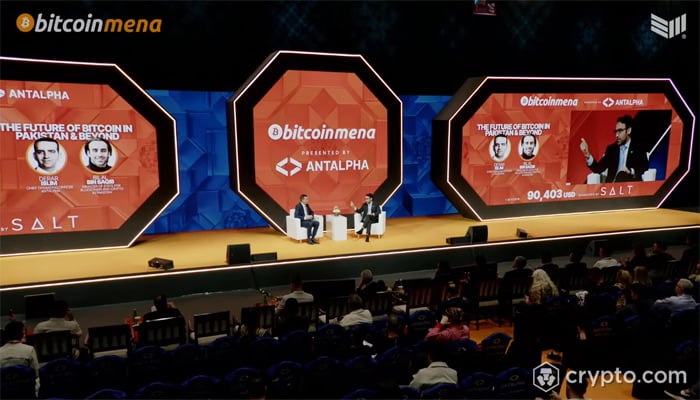
Pakistan took the global stage at Bitcoin MENA 2025 on Tuesday, where Pakistan Virtual Assets Regulatory Authority (PVARA) Chairman Bilal bin Saqib joined a session to discuss the country’s plan for a structured, responsible, and globally aligned digital asset framework.
At Bitcoin MENA 2025, the region's largest gathering of global Digital Assets and Bitcoin leaders, policymakers, and builders, Bilal delivered a defining message on Pakistan's digital asset ambitions during a high-profile panel alongside Antalpha COO Derar Islim.
Speaking during a one-on-one session, Bilal outlined how Pakistan is approaching Bitcoin and digital assets not as speculation, but as economic infrastructure designed for the future.
He said: "We are building a system that protects users, and it does not suffocate builders. A system that bridges activity onshore instead of driving underground, and Pakistan is ready for business."
"Pakistan is ready for innovation, as it is not chasing the future, but is trying to build a new one," said Bilal, emphasising the country’s demographic strength, with over 70% of the population under the age of 30.
He framed blockchain and digital assets as a foundational financial rail for the Global South and a catalyst for transforming Pakistan’s youth from consumers into builders.
"For many Pakistanis, Bitcoin is not a theory, it's a relief, as it solves problems that traditional systems have not solved for decades.
- Savings: When your currency has lost over 50% of its value over the past five years, you don't need a lecture, but you need a hedge. Bitcoin gives people a way to store value outside volatility, which is created by politics, printing, and inflation.
- Access: Over 100 million Pakistanis are still unbacked, and Bitcoin gives them a financial identity without waiting for an account that they might never be offered.
- Cross-border earnings: Pakistan is home to one of the largest freelancer nations. Bitcoin and blockchain rails allow them to get paid globally, instantly and transparently. For many young people in Pakistan, Bitcoin is the first time they felt that their money belongs to them and not to any specific system."
The session concluded with a view on emerging markets, where Bilal mentioned that the next phase of Digital Assets and Bitcoin adoption will be driven not by traditional financial centres, but by countries where economic pain is real and digital innovation can create outsized impact.
He positioned Pakistan alongside other emerging economies as future case studies in energy-backed mining, open-source development, and technology-led growth.
With more than 7,000 participants and delegates from over 40 countries in the room, the message to investors and builders landed clearly: Pakistan is open for compliant innovation, institutional partnerships, and long-term digital asset growth.