Pareesa Afreen
  Dec 03, 2025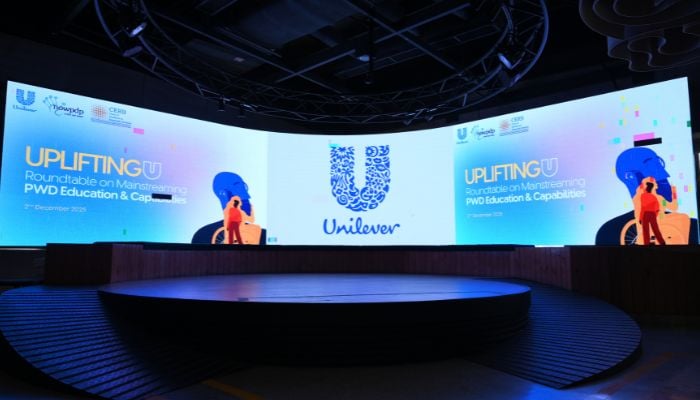
Disability inclusion in Pakistan remains mired in a standstill, where millions of Persons with Disabilities (PWDs) remain unable to make the transition from education to meaningful employment.
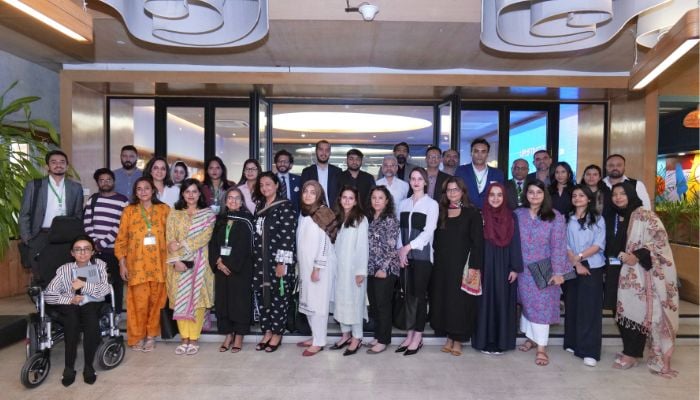
In partnership with Network of Organisations Working For People With Disabilities Pakistan (NOWPDP) and Pakistan Business Council (PBC), Unilever Pakistan on Tuesday brought together academia, industry, and the development sector for a closed-door, focused dialogue at an UpliftingU roundtable in Karachi to confront these long-standing barriers and rebuild a functional talent pipeline.
The purpose was clear: to understand PWDs' involvement in terms of entering universities, employers getting fewer CVs, and what systemic reforms are needed to mainstream talent across classrooms and workplaces.
Unilever Pakistan HR Head Sanam Sheikh opened the session with a rather candid reality check. “Access and opportunity come easily to many, but that is not the reality for everyone. Pakistan has 27 million persons with disabilities, yet very few reach higher education or the workplace because our environments are still not accessible.”

Broken pipeline: Where talent disappears
Participants unanimously agreed that the biggest leak in Pakistan's disability talent pipeline happens before employment even begins, inside schools, colleges, and universities.
SZABIST BBA Program Manager and Assistant Professor Fahad Zuberi, who has worked with NOWPDP for over a decade, said the problem starts much earlier than recruitment. “Nobody is truly working on mindset change, which should be considered as the most important task.”
As he summarised it, "Acceptance needs to start at schools and then percolate upwards." Even today, most institutions are without accessible washrooms, ramps, or affordable assistive technology. "Curriculum books are often not available in accessible formats, so the barriers begin from the first day a child enters the classroom," he added.
Academics corroborated that universities tend to respond only once a disabled student appears, a reactive approach that leaves both students and staff scrambling.
Maliha Murtaza from Aga Khan University admitted, “Even institutions that have resources face mindset blocks. We start firefighting only after a student comes to us. That’s not inclusion, that’s improvisation.”
Emphasising importance of institutional readiness across education and industry, PBC Representative Nazish Shekha stated: “We are working with companies to identify gaps and chart a clear path forward that upholds dignity and equal opportunity. True diversity cannot be achieved without addressing the fundamental issues of accessibility and infrastructure.”
Families, schools, and society: the first barriers
One of the things the roundtable highlighted was how much discrimination starts far before a job search. Participants cited that schools can be quite resistant to change; leadership and parents tend to resist inclusive education.
“We have to start at the grassroots level so that the mindset shift can happen early,” one panellist said. From an employer’s perspective, one attendee reminded that exposure in society helps frame attitudes on future hiring.
Many kids grow up never interacting with people who have disabilities, and that means “future HR managers and team leads don’t even think about disabled talent; it’s not in their imagination.”
On paper, Pakistan is not short on commitments.
The country has a disability employment quota under the Disabled Persons (Employment & Rehabilitation) Ordinance, 1981, while the HEC's 2021 Policy for Students with Disabilities calls for accessible infrastructure, assistive technologies, and campus support services.
But participants agreed that physical, attitudinal, and systemic barriers continue to block access:
- Campuses lack ramps, elevators, and accessible washrooms.
- Instructors are not trained in inclusive teaching
- The students depend on their peers to write the exams due to a lack of scribes or software.
- Disability support offices remain underfunded or nonexistent
“Institutions must identify limitations clearly and develop solutions through proper policy-making. Every organisation needs its own dedicated policies because that is the foundation of real and systematic change,” said NOWPDP CEO Omair Ahmad.
One of the strongest calls came from NOWPDP’s Strategic Partnerships team. NOWPDP Senior Associate of External Engagement Ashir Wilson argued that experiential learning is not enough without institutional systems behind it. “If I don’t know how to support a person with a disability, I should be able to open the handbook and follow the steps,” he said, emphasising the need for written Standard Operating Procedures (SOPs), policies, and clear procedures.
From performative hiring to meaningful jobs
While employers were willing to recruit PWDs, the discussion indicated that very few organisations still have a roadmap.
From experience at Faysal Bank, Habiba Salman noted that skill gaps vary by disability; however, these are entirely trainable. Their first batch of employees with disabilities had “zero customer complaints”, she said, outperforming many regular officers. But she emphasised that the PWDs also needed orientation on workplace ethics, while their colleagues were in continuous need of sensitisation.
Meanwhile, inclusion done poorly hurts. The example GSK’s Sabiqa Kiyani gave of her niece, who is deaf, who moved into a better-paying job where she was given nothing to do, seriously impacted her confidence until she went back to her previous employer. “Hiring without giving meaningful work is a disaster. The intent matters,” Kiyani said.
Selena Baig from HBL reminded the room that the private sector benefits tremendously from disability inclusion. “This isn’t charity; we gain from it. The talent is there; we just have to develop it.”
As part of UpliftingU, NOWPDP announced a new capability development programme in collaboration with Unilever Pakistan to widen skills avenues and improve employability for PWDs. This will strengthen the ecosystem for disability inclusion by way of structured training, exposure opportunities, and employer readiness frameworks.
By the end of the session, one message had come through loud and clear: inclusion cannot be treated as a corporate social responsibility (CSR) project, a key performance indicator (KPI) target or a symbolic hire.
It requires a shift in mindset, accessible classrooms, informed faculty, equipped employers, institutional policies, and most importantly, accountability.