Dec 23, 2025
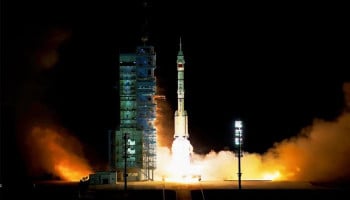
China has carried out its second major attempt this month to recover a reusable rocket booster, but the effort did not result in a successful recovery of the rocket’s first stage.
While the mission achieved part of its objectives, the failed landing highlights the challenges China faces as it tries to catch up with SpaceX’s reusable rocket technology.
The rocket’s second stage successfully entered its planned orbit, confirming that the launch itself met key technical goals.
However, the lower part of the rocket, known as the first stage or booster, was not recovered. This was the second attempt in December to test reusable rocket technology, following the maiden flight of the Long March 12A.
The test marks the official beginning of China's reusable rocket programme, an area in which it has trailed behind global leaders. China has successfully launched dozens of rockets carrying satellites into orbit in recent years but has yet to complete a full booster recovery, viewed as integral to next-generation space missions.
Privately owned and state-owned Chinese space companies are racing to develop reusable rockets in a bid to compete with Elon Musk's SpaceX, which mastered recovery several years ago.
Reusability is considered key, as it cuts down launch costs and enables multiple flights by rockets, cutting down on costs and time taken for satellite deployment.
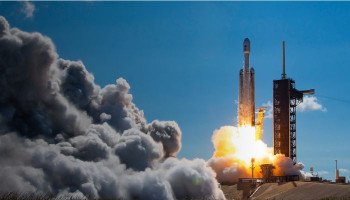
With the Falcon 9 rocket providing the heavy lifting, SpaceX's Starlink project has achieved near-dominant market share in the low-Earth orbit satellite arena.
According to reports by Reuters, China has launched several hundred Low Earth Orbit (LEO) satellites, but experts say it faces significant hurdles in matching Starlink without the use of a reliable reusable rocket.
Earlier this month, private firm LandSpace also conducted a similar test with its Zhuque-3 rocket, which also failed due to a landing issue. The developer of Long March 12A, China Aerospace Science and Technology Corporation, remains central to China's space ambitions despite the setback.
These officials say that repeated failures in this process also happen to others, citing that Elon Musk of SpaceX also experienced multiple crashes before they successfully landed vertically in 2015.