Dec 25, 2025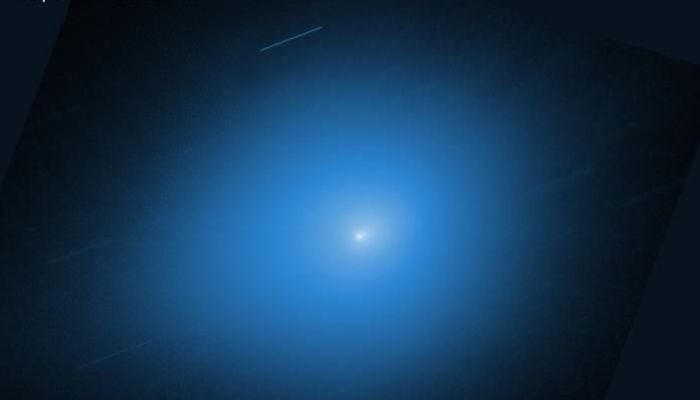
Astronomers around the world have been surprised this year with the spotting of interstellar comet 3I/Atlas, only the third known object from outside our solar system ever to pass through it.
Discovered in July, 3I/Atlas Interstellar Comet quickly drew attention because it behaved unlike any ordinary comet seen before, briefly sparking speculation about alien origins before science provided clearer answers.
Is 3I/Atlas an alien spaceship?
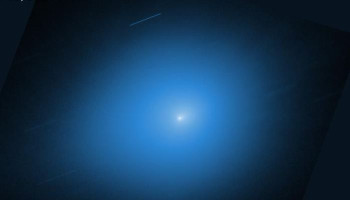
Powerful telescopes soon confirmed that the object was not a spacecraft but a fast-moving comet. What was unusual about it was that it seemed to shine, even though it was so far from the Sun.
Comets are normally dark and only brighten when solar heat vaporises their surface of ice to create a glowing cloud around them, together with a tail of gas and dust.
However, 3I/Atlas created this shining coma of gas far beyond the orbit of Jupiter, something seldom seen.
As Northeastern University Physics Assistant Professor Jacqueline McCleary said, "The behaviour pointed to a different chemical makeup." Further observations, including data from NASA's James Webb Space Telescope, revealed that interstellar comet 3I/Atlas hosts abundant carbon dioxide ice.
Its carbon dioxide-to-water ice ratio measured at 8:1, one of the highest ever recorded in any comet. That would suggest the comet formed in a very different environment than objects from our own solar system.
Scientists believe the comet likely came from the Milky Way’s central region, though tracing its exact origin will be difficult. It was probably pushed out of its original solar system after a strong gravitational interaction.
Studying its composition may help researchers understand how other solar systems form and why conditions in ours became suitable for life.
Later this year, as the 3I/Atlas interstellar comet moves away from the Sun and crosses Jupiter’s orbit, NASA’s Juno spacecraft may observe it closely.