Apr 02, 2026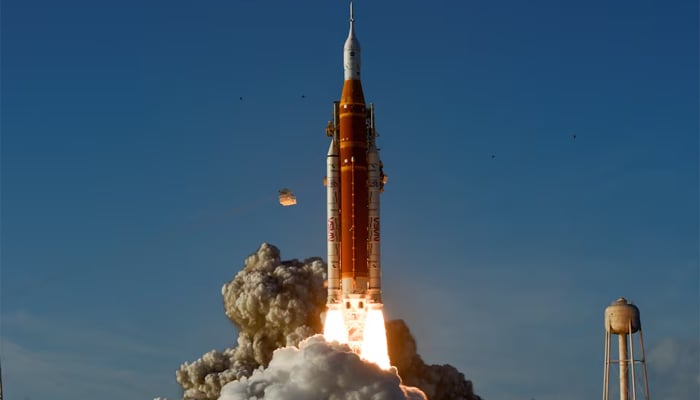
NASA has successfully launched its first crewed mission to the Moon in more than half a century, marking a historic return to deep space exploration and a major step toward future lunar landings.
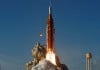
The mission, Artemis II, lifted off on April 1 from the Kennedy Space Center in Florida, carrying four astronauts on a 10-day journey that will take them around the Moon and back to Earth.
This is the first time humans have travelled toward the Moon since the Apollo programme ended in 1972, underscoring a renewed global race in space exploration.
Unlike the Apollo missions, Artemis II will not land on the lunar surface. Instead, it is designed as a test flight to evaluate NASA’s Space Launch System (SLS) rocket and Orion spacecraft under real crewed conditions.
The spacecraft is expected to travel roughly 252,000 miles (406,000 km) into space, making it the farthest distance humans have ever ventured.
The mission will assess critical systems including life support, navigation, and heat shielding, all of which are essential before astronauts can safely return to the Moon later this decade.
The Artemis II crew includes NASA astronauts Reid Wiseman, Victor Glover, and Christina Koch, along with Canadian astronaut Jeremy Hansen.
The mission is notable for its diverse crew, with Koch set to become the first woman and Glover the first Black astronaut to travel toward the Moon, while Hansen will be the first non-American to venture beyond low-Earth orbit.
The Artemis programme is central to NASA’s long-term goal of establishing a sustained human presence on the Moon and eventually sending astronauts to Mars.
It also comes amid increasing competition from China, which is planning its own crewed lunar missions in the coming years.
If successful, Artemis II will pave the way for future missions, including a planned lunar landing later this decade.
The launch is being seen as a major milestone for NASA, particularly after years of delays, budget scrutiny, and technical challenges surrounding the SLS rocket programme.
Reacting to the launch, US President Donald Trump said: "It’s amazing," Trump said of the launch during a national address about the Iran war. "They are on their way and God bless them, these are brave people. God bless those four unbelievable astronauts."
As Artemis II begins its journey, the mission is expected to play a defining role in shaping the future of human space exploration.